Pricing
How pricing works on a paver job
Estimates are free and we measure before we price. There are no figures on this page, because two driveways of the same size on the same street can price differently once you count the demolition, the access and the material.
01 What moves it
Seven things that change the number
These are what we are actually looking at while we walk the area with a tape. Most of them are visible in the photographs on this site.
- The area, measured on site. Square footage sets the material order and most of the labour. We measure it ourselves rather than work off a survey drawing, because a pool deck or a driveway rarely matches the paper.
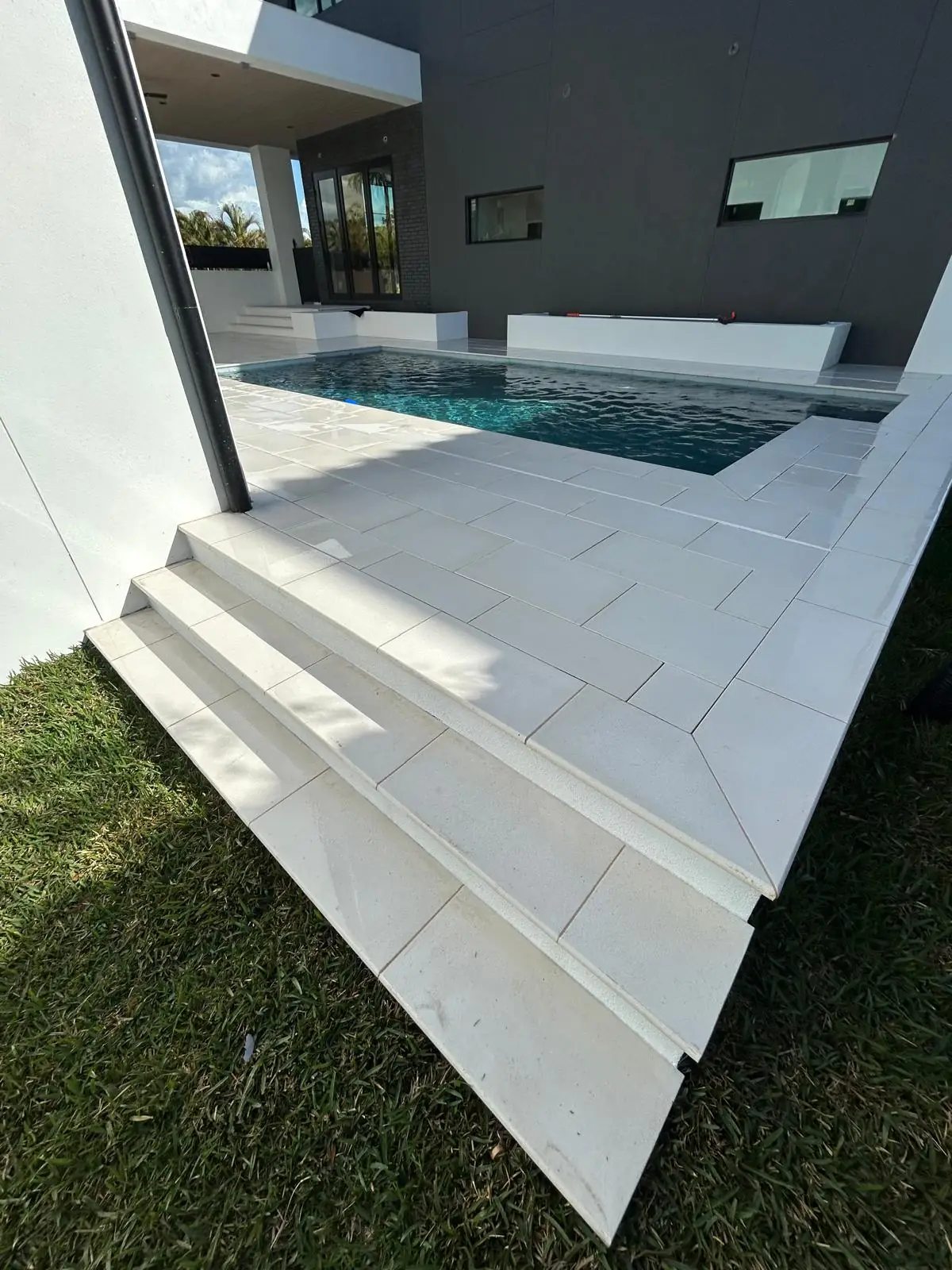
- The paver or the stone you pick. Large-format limestone and a standard concrete paver in a multi-tone blend sit a long way apart on material, and both of them are in the finished photographs on this site. We talk the material through with you on site before anything is priced.
- Demolition and what comes out of the ground. Breaking out an old slab or an old driveway is its own job, and so is digging the base out under it. All of that happens before a single paver is set, and how much of it there is moves the number.
- Access for the machine and the material. A side yard we can back a truck into is one job. A gate no machine fits through means the base and the pavers come round by wheelbarrow, and that shows up in the labour.
- Cuts and curves. A straight rectangle closes fast. A curved bed line, a mitred corner at the coping, or stone cut tight against a brick wall is saw time, and the cut-off saw and the wet saw bench sit in the frames from our limestone job.
- Steps and level changes. A step run with bullnose treads, a raised deck, a landing at the front door: each one is layout, risers and cut treads instead of flat field paving.
- Edge restraint and drainage. Paving is only as good as whatever holds it in. A poured strip with a block edge course, or a linear drain set flush in the field, is part of the build and part of the number.
02 The visit
What happens when we come out
The visit costs nothing and there is nothing to sign at the end of it. Four steps, and the price only exists once step two is done.
-
1
You get in touch
Send the form or call. Tell us the city and what you want done.
-
2
We come out
We measure on site and talk through the material with you.
-
3
You get it in writing
The estimate comes to you written down, with the area and the material on it.
-
4
We schedule and start
Once you approve the estimate, we put the job on the calendar and start.
03 Before you ask
Three things worth having ready
None of it is required. It only means we can talk about the real job on the first visit instead of talking around it.
- Rough dimensions. Pace the area out if that is all you have. Length by width in feet is enough for us to know what we are driving to.
- Photos of the space. What is there now, what is coming out, and the gate or the side yard we would be carrying material through. A photo of the access answers more than a paragraph about it.
- The look you want. A picture of a deck, a patio or a driveway you like tells us the material and the pattern faster than describing it does.
If you have none of it, call anyway. We would rather walk the space with you and work it out there than have you measure your own yard for us.
Ask what yours would cost
Give us the town, a rough size and what you want built. We measure on site and the estimate comes back in writing, with no charge for the visit.